

Most meal prep advice is written for households. Two people, minimum. Sometimes four. The recipes assume a full fridge, a full freezer, and someone else finishing the other half of that pasta bake. When you’re traveling solo in a van, none of that applies, and following that advice creates a different kind of problem: too much food, not enough time to eat it, and produce going soft in a 45-litre fridge somewhere off a B-road in the middle of nowhere.
Solo van cooking is a specific skill. The portioning is different. The math is different. And the consequences of getting it wrong — wasted food, wasted money, and a bin that smells questionable by Thursday — are very real.
After years on the road and more failed batch cooks than I’d like to admit, here’s how I actually approach meal prep as a solo traveler.
1. Why Standard Recipes Break Down for One Person
Take a standard one-pot curry recipe. It serves four. You halve it for two people — fine. You try to quarter it for one and suddenly you’re using half an onion, a third of a tin of tomatoes, and 75g of lentils. The ratios get weird, the timings change slightly, and you end up either making too little or, more often, just making the full batch anyway and eating it four days in a row.
That’s not meal prep. That’s punishment.
The better approach for solo van cooking is to think in single-serve volumes from the start, not scaled-down family recipes. Specifically:
- One fist of dried pasta or rice = roughly 80g = one satisfying portion
- One palm-sized piece of protein (chicken thigh, firm tofu, a couple of eggs) = adequate for one meal
- One small tin of beans or lentils (roughly 240g drained) = two portions of protein/carb base, not one
That last point catches people out constantly. A standard 400g tin of chickpeas, once drained, gives you about 240g. That’s comfortably two solid portions, not one. If you’re building a chickpea stew and tipping in the whole tin for a single meal, you’re eating double portions without realising it, and then wondering why you have no appetite by dinner.
Over at Van Life Kitchen, there’s a good breakdown of repeatable solo recipes that already account for this. Worth bookmarking before you do a big grocery shop.
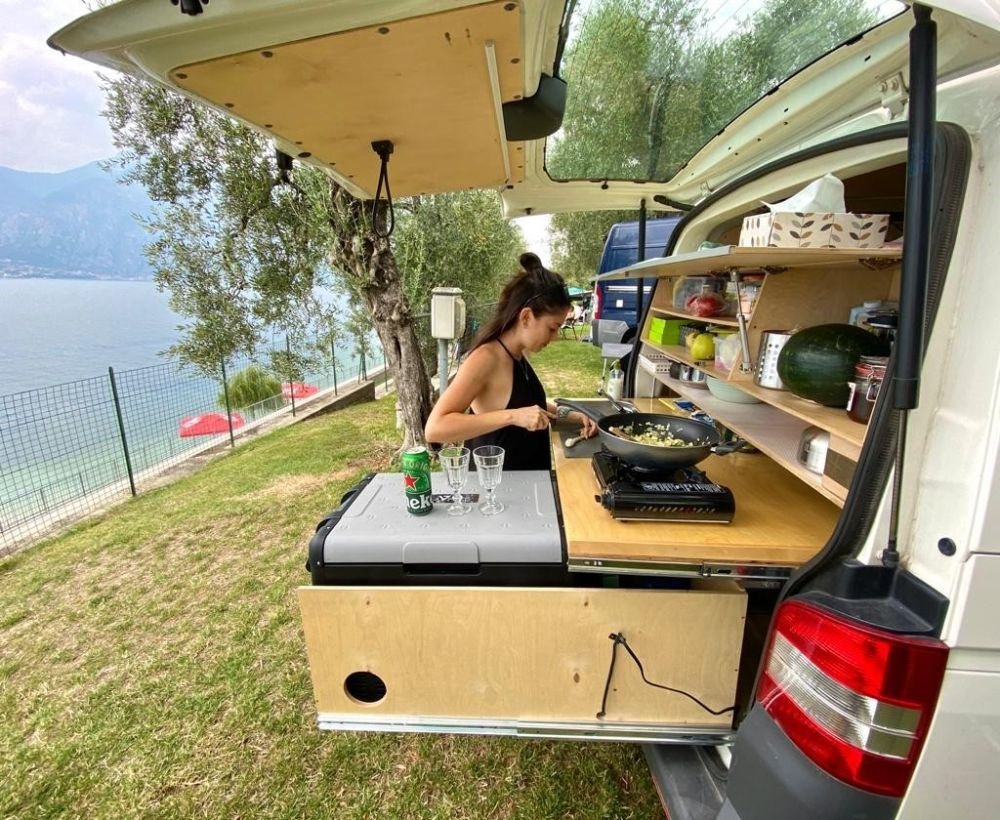
2. Real Portion Sizes for Solo Van Cooking: A Quick-Reference Chart
Getting this right takes the guesswork out of shopping and cooking. These are the numbers I actually use, not theoretical nutritional ideals — real amounts that keep you full without generating waste.
| Ingredient | Solo Portion (Dry/Raw) | Notes |
|---|---|---|
| Rice (white or brown) | 75-80g dry | Weighs ~220g cooked |
| Pasta | 80g dry | Heavier hunger days: 90g |
| Lentils (red or green) | 60-70g dry | Expands significantly |
| Canned beans (drained) | 120g | Half a standard 400g tin |
| Chicken breast | 130-150g | One small-medium breast |
| Chicken thigh (boneless) | 120-130g | More forgiving to cook |
| Eggs | 2-3 | 3 for a main, 2 for a side |
| Firm tofu | 150g | Roughly half a standard block |
| Oats (porridge) | 50g dry | With water or plant milk |
| Canned tomatoes | 200g | Half a 400g tin |
| Onion | 1 medium (100g) | Full onion per meal, not half |
| Potato | 200g raw | Two medium-sized potatoes |
| Frozen veg | 100-120g | A generous handful |
The onion point matters more than it sounds. A lot of solo cooks try to save half an onion in cling film in the fridge. It smells, it goes slimy within two days, and it’s not worth it. Use the whole onion. Adjust the rest of the recipe around it. It’s not going to ruin anything.
3. Building a Solo Prep System That Actually Works in a Van
Here’s where most van meal prep advice falls down — it treats prep like you’re doing a Sunday batch cook in a proper kitchen. Lots of containers, multiple trays in the oven, everything labelled and stacked neatly. That works in a house. In a van with a single burner, 45 litres of fridge space, and limited water for washing up, you need a different system.
The one that works for me is what I call ingredient batching over meal batching.
Rather than pre-cooking three full dinners and storing them in separate containers, I prep individual components and mix them across meals through the week. A batch of cooked rice takes maybe 20 minutes and lasts three days in the fridge. Roasted veg — onion, courgette, pepper, whatever’s about to turn — takes the same amount of time and works across four or five different meals. A portion of cooked lentils or chickpeas can go into a quick stew one night and a simple salad the next.
This works because:
It requires fewer containers. Fewer containers means less washing up, less clutter, and less fridge tetris. It also reduces the flavour fatigue problem, where you’re eating the same full meal on repeat and dreading it by day three. Separate components stay neutral. You season them differently each time.
The 9 proven kitchen tips guide on Van Life Kitchen goes into this kind of system in more detail if you want to build it out further.
What to prep in one session (solo, 3-day supply):
- Cook 200g dry rice (makes roughly 550-600g cooked — split into portions and refrigerate)
- Roast one full tray of veg (two peppers, one courgette, one red onion — takes 25 mins at high heat in a van oven or Omnia stovetop attachment)
- Cook one batch of protein — either a batch of eggs hard-boiled, one portion of lentils, or two chicken thighs
- Keep one raw protein option available (eggs, canned tuna, or tinned sardines) for the days you don’t want to cook at all
That’s it. Three days of flexible, non-repetitive meals from one prep session.
4. The Mistakes Solo Van Cooks Keep Making with Portions
This section exists because I’ve made all of these mistakes and still occasionally slip back into them after a long drive when the brain is fried and the appetite is unreliable.
Buying veg like you’re feeding a family. A full head of broccoli for one person is ambitious. It’ll last two, maybe three meals if you’re disciplined. But most solo cooks buy it, use half, leave the rest in the fridge, and throw away a sorry-looking floret situation four days later. Buy smaller quantities more frequently, or stick to ingredients that hold: cabbage, carrots, root vegetables, and anything frozen.
Cooking double “to save time” without a plan. Cooking extra is only efficient if you know exactly how you’ll use it. Extra rice with no plan becomes a container of rice you keep moving around the fridge for a week. Extra pasta with sauce already mixed in goes soggy and sad within 24 hours. If you’re going to double a portion, decide in advance: tomorrow’s lunch is this rice with tinned tuna and a drizzle of olive oil. Done. Now it’s efficient.
Treating a tin of something as a single portion. This is the big one. Tins of beans, chickpeas, lentils, or tomatoes are almost always two portions for a solo cook, sometimes three. The ingredient batching approach helps here, but the real fix is changing how you read a tin. When you open it, think: half now, half tomorrow. Not: all of it tonight.
Underestimating how much a 45-litre fridge holds. A 45-litre van fridge is actually a lot of space for one person. The problem isn’t capacity — it’s organisation. If you’re throwing food in without a system, things get buried, forgotten, and wasted. Keep one shelf for cooked components, one for fresh produce, and one for dairy and drinks. Simple, but it changes everything.
The budget hacks post covers how portion control connects directly to van kitchen spending, if that’s the angle you’re looking at too.

5. Solo Meal Prep When You Have No Power and No Time
Some days there’s no shore power, the solar’s running low, and the idea of cooking a proper meal feels like a lot. These are the days when pre-planned no-cook or low-cook options matter most. And they’re easy to build into a solo prep routine.
Always keep at least two of these in the van:
- A tin of good sardines or mackerel (eaten over rice or with crackers — done in two minutes)
- A tin of cooked lentils or beans (can eat at room temperature with lemon juice and olive oil — no heating needed)
- Instant oats (cold overnight oats work fine in a van fridge and require zero cooking)
- Nut butter (with fruit or bread — a solo van staple that gets underrated)
- Hard-boiled eggs prepped during your last cook session
These aren’t fallback options out of laziness. They’re part of the system. Knowing you have a proper no-cook meal available removes the pressure from every other decision in the day and stops you from making expensive, wasteful impulse stops.
FAQs
How much food should I buy for a solo van trip of 3-4 days?
For 3-4 days solo, a focused shop looks like: two bags of grains (rice and pasta or oats), two tins of beans or lentils, one fresh protein (chicken thighs or a block of tofu), one or two eggs (or a small box of six), a bag of root veg, one or two items of leafy or quick-cooking veg, a tin of tomatoes, and your pantry staples (oil, onion, garlic, salt). That’s four to six decent meals without overloading a small fridge.
Can I meal prep without a fridge in a van?
Yes, but you have to lean harder on shelf-stable ingredients. Cooked rice and grains keep for about a day without refrigeration in mild weather (less in summer heat), but tinned goods, dried pulses, oats, nut butters, and hard cheeses don’t need cold storage. A small insulated bag with a single ice block can extend fresh food by another 12-24 hours if needed.
What containers work best for solo van meal prep?
Stackable glass containers with clip lids are the most practical — they don’t absorb smells, they’re easy to clean with minimal water, and they seal reliably. Two or three 500ml containers and one 1-litre container covers most solo prep needs without cluttering the fridge. Avoid flimsy plastic that stains or warps.
How do I stop getting bored eating the same prepped food?
The ingredient batching method helps a lot here. Keeping components separate — cooked rice, roasted veg, a protein — rather than pre-mixed meals means you can vary seasoning, sauces, and combinations each day. One night it’s a grain bowl with tahini, the next it’s a quick fried rice. Same base ingredients, completely different experience.
Is it worth buying fresh herbs for solo van cooking?
Honestly, only if you’ll use them within two days. Fresh herbs wilt fast in van fridges. A small pot of basil or coriander can sit on the dashboard in sunlight and last a week, but cut herbs in a bag are usually gone before you get through them solo. Dried herbs and a good quality olive oil go further. A squeeze of lemon does more work than most fresh herbs anyway.
Van Life Kitchen covers practical cooking strategies, real recipe guidance, and gear advice for life on the road — you can explore the full recipes archive and tips section to build out your van kitchen system.