
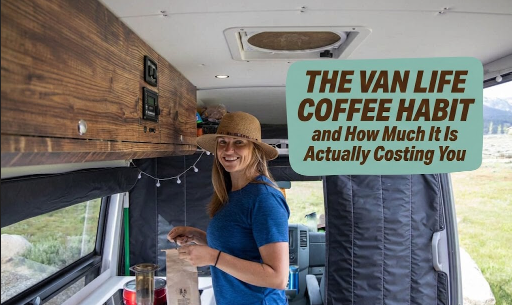
Last spring, somewhere outside Moab, I sat down and actually did the math on my coffee spending. Not because I was worried about money exactly, just because I’d started noticing the number on my card statement looked wrong.
It was not wrong. I had spent $284 in thirty days on coffee stops. One person. Thirty days. Two hundred and eighty-four dollars.
If you’d asked me to guess, I would have said eighty. Maybe ninety. I knew I was stopping a lot, but it never felt like a pattern because every individual stop felt justified. Long drive. Needed wifi. The bathroom situation was getting critical. Cold morning. It all made sense in the moment. The total did not make sense.
1. Breaking Down What You’re Actually Spending
The math on van life coffee spending is almost never what people expect. Not because coffee is secretly expensive, but because the individual purchases are small enough that they don’t register as decisions. A $4.50 flat white here, a $5 iced coffee there, a $3.50 drip at a truck stop because you needed the bathroom anyway. Each one is barely a thought. The month is where it becomes a problem.
Run that pattern five times a week and you’re looking at $70 to $90 a month. Run it daily and you’re past $130. Add a second drink on long driving days, or a pastry because you felt weird ordering just one thing, and the number moves toward $200 without you noticing.
Here’s the actual comparison across the methods most van lifers use:
| Coffee Method | Setup Cost | Cost Per Cup | Monthly (1 cup/day) | Monthly (2 cups/day) |
|---|---|---|---|---|
| Coffee shop — drip/standard | $0 | $3.50 – $5.00 | $105 – $150 | $210 – $300 |
| Coffee shop — espresso-based | $0 | $4.50 – $6.50 | $135 – $195 | $270 – $390 |
| French press (good beans) | $25 – $35 | $0.30 – $0.50 | $9 – $15 | $18 – $30 |
| Moka pot (good beans) | $20 – $40 | $0.25 – $0.40 | $7.50 – $12 | $15 – $24 |
| AeroPress | $35 – $45 | $0.30 – $0.50 | $9 – $15 | $18 – $30 |
| Instant (quality brands) | $0 – $5 | $0.25 – $0.60 | $7.50 – $18 | $15 – $36 |
Over a full year, a daily coffee shop habit runs between $1,260 and $2,340 for one person. The van-made version of the same habit runs $90 to $180 annually. That gap covers a lot of propane, two months of groceries, or the kind of campsite upgrade that makes a hard stretch of road feel like it was worth something.
2. Why Van Life Makes This More Expensive Than It Looks
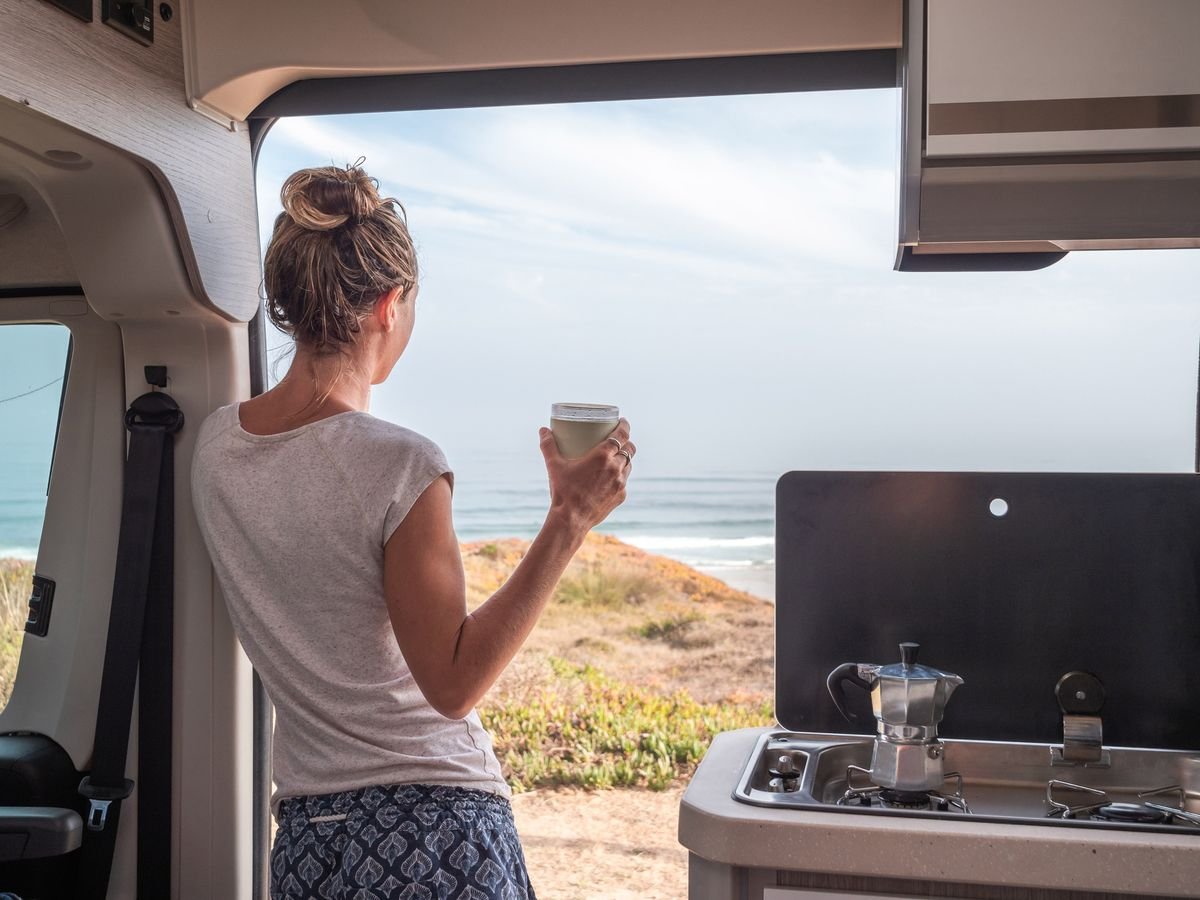
The problem isn’t the coffee. It’s that coffee stops come bundled with other things.
You pull in because you need wifi. Or a real bathroom. Or because you’ve been in the driver’s seat for three hours and sitting somewhere that isn’t moving sounds like medicine. The coffee is the price of admission. You buy it because you’re using their space, and honestly, that’s fair. But it means the coffee cost isn’t really the coffee cost. It’s the rent on a short break, and breaks are cheap to justify.
This compounds in van life because most tourist-friendly areas, which is where a lot of us end up spending time, charge more. Sedona. Asheville. Joshua Tree. Bend. Anywhere with a “developed” outdoor culture and a farmers market on Saturday is also a place where an iced oat milk latte is $8 and comes with locally roasted beans that were sourced responsibly at a markup you feel in your checking account. I’ve paid it. I’m not above it. But I was not making a real choice each time. I was just doing what was convenient.
There’s also something worth naming: most van lifers who cook regularly, the kind of people following along with Van Life Kitchen, have already solved breakfast and lunch and dinner. They’ve found the rhythm for van life breakfasts they can make in under 8 minutes, they’re not spending restaurant money on every meal. Coffee is often the last holdout. The one thing that still happens at a counter instead of a propane stove. And because it feels like a small indulgence rather than a budget line, it never gets scrutinized the way groceries do.
3. The Van-Made Methods That Are Worth Setting Up
There’s a real spectrum here, and the right choice depends on how seriously you take your coffee, how much usable counter space you have, and whether you’ll actually maintain a piece of gear long-term or let it get funky under the passenger seat after three uses.
The Moka pot is where I started and still what I use most mornings. Small, durable, works directly on a gas burner, and makes coffee strong enough that one cup does the work of two from most drip setups. Entry cost is low, cleanup is quick, and the coffee is genuinely good if you’re buying decent beans. The common complaint is that it’s “not quite espresso,” which is technically accurate. But it’s close enough for a cup at a trailhead at 7am when the view is doing half the work anyway.
The AeroPress gets more love in van life circles than any other method, and it earns it. Fast, lightweight, works with water just off the boil and forgiving of slightly imprecise technique. It also makes a concentrate you can top with hot water if you want something closer to an Americano. The plastic body doesn’t bother most people, though for anyone making coffee twice a day for years, it’s worth knowing the durability over time.
French press is where most people start because they already own one. It works fine in a van but requires a bit more attention to water temperature and produces grounds you have to deal with afterward. Also more fragile than the other two. I have seen a lot of French presses in van setups. I have seen very few survive a full year without at least one replacement glass.
Instant coffee, specifically the better brands, Cusa and Verve both make solid single-serve packets, has genuinely closed the quality gap enough to be worth keeping as a backup. Not for every morning if you care about flavor, but for 5am departures when breaking out any gear at all sounds like too much effort? Completely reasonable. I keep a few packets for exactly that situation.
The same logic behind van life batch cooking without a freezer applies here. Setup takes ten minutes once, the daily routine takes two, and you stop making an expensive impulse decision every single morning because you already have a good option in the van.
4. Where Most People Get This Wrong
The consistent mistake is spending too much on gear and not enough on beans.
Someone gets serious about van coffee and picks up a hand grinder for $120, an AeroPress for $45, a gooseneck kettle. Good gear, no argument there. And then fills it with whatever whole beans happened to be on sale at a roadside Walmart. The equipment does its job. The beans do not. The result is coffee that’s fine, not noticeably better than decent instant, and they wonder if the setup was actually worth the investment.
Buy better beans. A $16 bag instead of a $9 bag makes a disproportionate difference in the cup. You’re already saving $80 to $100 a month by not stopping at coffee shops. You can afford the better bag. That’s the entire trade.
The second thing people miss: add-ins cost money too. Creamer, oat milk, sugar, vanilla syrup if you’re that person. These aren’t zero. Add $0.75 to every cup and your $0.35 cup is now a $1.10 cup. Still significantly cheaper than a coffee shop, but the real number matters when you’re working from an actual budget on the road. Knowing the accurate per-cup cost is different from knowing the rough ballpark.
Third, and this one is subtle: water quality affects taste more than most people expect. Hard water, chlorinated campground hookups, tank water that’s been sitting for ten days. All of it shows up in the cup in ways that even a great bean can’t fully hide. A simple carbon filter pitcher or an inline filter on your van’s water line isn’t expensive and makes a real difference. At Van Life Kitchen, the whole approach is about closing the gap between what you make in the van and what you’d get at a restaurant or a coffee shop. With coffee, water is one of the most direct levers you have.
For anyone working through a real food budget on the road, van life meal prep for solo travelers handles the line-item thinking that applies here too. Coffee should be in the budget, not floating somewhere outside it where it doesn’t get counted.
5. The Part Nobody Usually Talks About
This is a slight detour, but it’s worth naming.
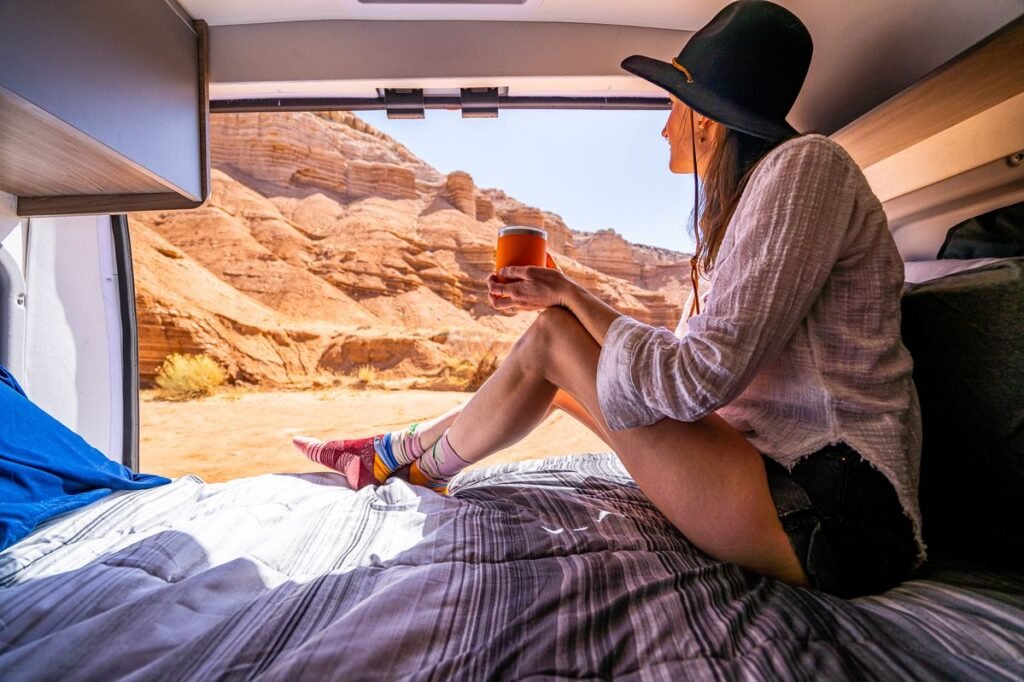
For a lot of van lifers, buying coffee out isn’t purely about the coffee. It’s about sitting inside a real building. Having someone hand you something hot. Being part of an ordinary commercial transaction in a life that is otherwise anything but ordinary. That has value. Real value. I’m not telling anyone they’re wrong to want that.
But there’s a difference between choosing that experience because you genuinely want it, and defaulting to it because the alternative feels like too much setup. If your van coffee routine isn’t producing something you actually enjoy drinking, that’s fixable. A $40 Moka pot and a decent bag of beans is less than a week of what you were spending at coffee shops, and it solves the problem permanently.
Make the van option good enough that you stop going out by default, and then go out when you actually want to. That’s a different relationship with the habit. And it costs several hundred dollars less a year.
The $284 I spent that month outside Moab came down to $22 the following month. Same amount of coffee, same general mornings, same need to stop and sit somewhere quiet before driving again. I just moved the whole thing inside the van, and eventually the van was quiet enough.
FAQs
What is the most practical coffee setup for a van with no electrical hookups?
The Moka pot, French press, and AeroPress all run on whatever heat source you already have, which for most van kitchens means a two-burner propane stove. None require electricity. For the AeroPress, a basic stovetop kettle is all you need. You don’t need an electric gooseneck unless you’re chasing precise temperature control for delicate light roasts, which is a real thing but probably not your top priority at a dispersed camp in New Mexico.
Can you use a Nespresso or pod machine in a van?
Technically yes, if you have a strong enough inverter and a solid battery bank. Nespresso machines draw roughly 1,200 to 1,600 watts at brew, which cycles hard through a battery system. On solar only, it’s a meaningful drain for one cup. The pod cost is also higher than loose beans, typically $0.70 to $1.20 per pod versus $0.30 to $0.50 for ground in a manual brewer. For most van setups without consistent shore power, manual brewing is the smarter long-term call.
How do you keep whole coffee beans fresh in a van?
Buy smaller quantities more often. A 250g to 500g bag finishes before it goes stale and doesn’t take up much storage space. Keep it sealed and away from direct heat and sunlight, both of which accelerate oxidation. Whole beans hold flavor significantly longer than pre-ground, so if you’re grinding fresh each morning, you have a bit more flexibility on batch size. A sealed glass jar works well once the original bag is open and the one-way valve is no longer doing anything.
Is a hand grinder worth buying for van life?
For most people who care about coffee flavor, yes. The Timemore C2 and Hario Slim Mini both grind consistently, cost under $60, require no power, and hold up well over years of daily use. Fresh-ground versus pre-ground is a real quality difference, particularly with lighter roasts. If you’re already spending money on good beans, a hand grinder is the highest-return gear upgrade you can make to the rest of the setup.
What is the cleanest way to deal with coffee grounds in a van?
Depends entirely on the method. The AeroPress produces a compact disc of spent grounds that drops straight into the trash, the tidiest option by a clear margin. Moka pots leave a small dry puck that taps out with no mess. French press requires dealing with loose wet grounds, which most people either compost at a campsite or wrap and bin at the next stop. If grounds near the sink concern you, AeroPress is the obvious answer.