
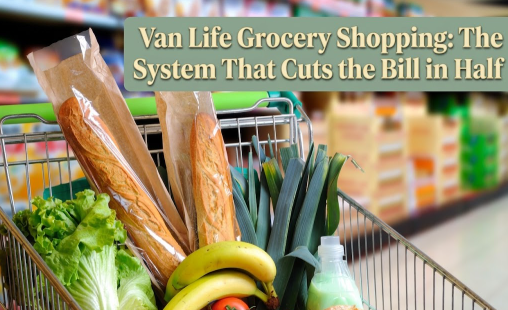
Most van lifers are spending forty to sixty percent more on food than they need to. Not because van life is inherently expensive. Because they’re shopping like they still live in a house.
I spent my first two months on the road doing exactly this. Buying for seven days. Loading up on fresh produce with every intention of using it. Finding half a bag of spinach turning to liquid somewhere behind a six-pack of oat milk by Wednesday. I was throwing food away and then spending money to replace the food I’d thrown away, and the whole thing was costing me nearly as much per month as a proper flat kitchen had.
That stopped when I built a system around how van life actually works, not how grocery shopping is supposed to work in theory.
This is that system.
1. The Three-Day Rule That Changes Everything
Weekly shops are a house habit. In a house, you have a full-size fridge, a freezer, and a meal plan that can absorb some inefficiency. Produce that’s going soft becomes a pasta bake. The leftover roast chicken gets pulled into sandwiches. The system has slack built into it.
A van has no slack.
Your fridge is 40 to 50 litres on a good day. There’s no freezer unless you’ve specifically built that into your setup. And if you’re moving every few days, which most of us are, “this will still be fine on Sunday” becomes a very optimistic assessment by about Thursday.
The fix is to shop for three days, not seven. Plan three days of meals. Buy specifically for those meals. Nothing extra, no buffer, no “might come in handy.”
Three-day shopping works because:
Fresh produce bought in smaller quantities actually holds better than a big weekly haul crammed into a warm van fridge. You’re visiting shops more frequently, but you’re also getting into better shopping locations by default. And you lose almost nothing. There’s no wilted courgette situation at the end of the week because there’s no seventh day where things run out of time.
It also keeps your thinking sharper. You’re planning three days of actual meals, not hoping seven days of rough ingredients will somehow come together. The difference in food quality is noticeable almost immediately.

2. Split Your Shopping Into Two Lists and Never Mix Them
This is the structural piece of the system that holds everything else together.
List one is your pantry. Olive oil, dried pasta, rice, tins of tomatoes, tins of beans, tins of lentils, oats, soy sauce, vinegar, salt, the spices you actually use. This list only gets updated when something runs out. These items live in your van. You don’t re-buy them each shop, you replenish them as needed, and they form the foundation of almost everything you cook.
List two is your fresh list. This changes every three days. One protein, one or two vegetables, maybe a lemon or some eggs. That’s genuinely it. Short by design.
The mistake most people make when they move into a van is trying to miniaturize a house kitchen. Buying every herb fresh. Keeping multiple proteins on rotation. Getting six different vegetables in because that’s what cooking is supposed to look like. The discipline is realizing that a van kitchen is a different beast. It’s more like a professional cooking kit: stripped to the essentials that earn their place every single time, with nothing on the shelf that’s there “just in case.”
Here’s how the two-list system looks in practice:
| Category | Pantry List (Replenish Only) | Fresh List (Every 3 Days) |
|---|---|---|
| Carbs | Dried pasta, rice, oats, lentils | Bread occasionally |
| Protein | Tinned chickpeas, tuna, sardines, mackerel | Eggs, chicken thighs, tofu |
| Vegetables | Tinned tomatoes, corn, passata | 2 items maximum |
| Fats and Flavour | Olive oil, soy sauce, vinegar, spice tin | Lemon or lime |
| Dairy | Parmesan (keeps long), small UHT milk | Small block of hard cheese |
| Emergency | Nut butter, instant oats, crackers | Nothing extra |
The fresh list column should look almost embarrassingly short. That’s not a failure of ambition. That’s the point.
For building out a reliable pantry base, the 5 van recipes that use the same 8 pantry ingredients guide on Van Life Kitchen is a good practical starting point. Those eight ingredients cover a surprising amount of ground without ever requiring much from the fresh list.
3. Where the Money Actually Disappears (It’s Not the Restaurants)
People assume the food budget problem is the occasional takeaway or the overpriced coffee. Those add up, but they’re not where the real money goes.
The real money goes on three things.
Duplicate pantry buying. Early on I bought paprika at least four times in two months. Every time I couldn’t see my spice tin clearly, I assumed I was out, bought a new jar, opened the storage to put it away, and found two jars of paprika already sitting there. That’s a stupid tax, and the fix is stupidly simple: do a 60-second inventory check before every shop. Open every cupboard. See what’s actually there. Put your spice tin in a place where you can see all of it.
Produce with no plan attached. The full head of broccoli bought because broccoli is healthy and you should eat more of it. The bag of salad leaves that cost three pounds and lasted about thirty-six hours in a hot van fridge. The red pepper you bought with a vague idea of doing something interesting that became a wrinkled afterthought in the back of the fridge by day four. Fresh produce only earns its place if there’s a specific meal attached to it. Otherwise, you’re buying something to throw away.
Panic shopping at expensive locations. A loaf of bread at motorway services costs twice what it costs at an Aldi. That’s not surprising and it’s not the problem. The problem is arriving at motorway services hungry and unprepared because the plan fell apart, and then buying the bread plus the snacks plus the overpriced pasta salad because you need food now. Every one of those panic stops costs more than three proper shops combined. The solution isn’t discipline at the point of purchase. It’s never being at that point of purchase.
The batch cooking without a freezer guide on Van Life Kitchen covers how to keep cooked components ready for exactly these moments. Having something in the fridge that reheats in five minutes removes almost every reason for an expensive emergency stop.
4. Where to Buy and When to Buy It
Location strategy is underrated. Most van lifers shop at whatever supermarket appears nearest when they need food, which is fine but leaves real money on the table.
A few things worth building into the routine:
Supermarket markdowns. Most large UK supermarkets reduce fresh protein somewhere between 6pm and 8pm. Chicken thighs that cost four pounds at lunchtime can be under a pound by 7pm. Same product, dramatically different price. If your route and timing allow for it, planning one fresh-protein stop in that window per three-day cycle saves a significant amount over a month. Not every stop will yield what you need, but when it does, the savings are real.
Markets. If you’re passing through a town with a Thursday or Saturday market, stop. Loose vegetables sold by weight, stallholders who’ll deal on the last half hour of unsold stock, and zero unnecessary packaging. This fits van life naturally because you’re already mobile, you’re used to timing decisions around location, and buying five different vegetables loose and weighing 200g of each is exactly how a three-day fresh list should look. You’re not buying a whole celery. You’re buying three stalks of celery because that’s what you need.
Farm shops, selectively. The genuinely good ones are excellent value on root vegetables, eggs, and seasonal produce, and the quality is usually noticeably better. The signal for a genuinely good farm shop is hand-written price labels and a selection determined by what’s in season right now. If everything is individually wrapped in biodegradable packaging and there’s a gift section near the entrance, move on. That’s lifestyle pricing dressed in a rustic jacket.
And for the days when no good option presents itself, keeping a solid shelf-stable fallback means you never have to shop out of desperation. The no-fridge van recipes that work for weeks on the road section covers what that fallback actually looks like in practice.
5. What This Costs in Practice (Actual Numbers)
Before I had any system, I was spending somewhere between £250 and £280 per month on food as a solo traveler. That figure embarrasses me slightly to write down, but there it is.
After three months of three-day shopping, stable pantry, and buying to shelf life rather than appetite, the number settled at £120 to £140 per month. Every month, not just the good ones.
That’s not a slight reduction. That’s cutting the bill roughly in half, which is the headline, and it’s accurate.
The reduction came almost entirely from two places: eliminating waste and changing where I bought fresh protein. I wasn’t eating worse. If anything, I was eating better, because fresher, smaller quantities of produce are just nicer to cook with than the third-day remnants of an overambitious weekly shop.
For solo travelers, this is the baseline. For two people in a van, the proportional saving is similar. Pantry economics scale well. A 500ml bottle of olive oil that lasts one person three weeks lasts two people two weeks. The per-meal cost barely shifts.
But here’s the thing I didn’t fully appreciate until I’d been doing it for a while: the system saves energy, not just money. Not having to think about whether something is still safe, not having to make a decision every day about what to eat because you’re staring at a disparate collection of ingredients that don’t obviously go together, and not having to replace things you’ve thrown away. The mental overhead of bad food planning is real, and it sits in the background of every decision you make when you’re tired.
The one-pot van meals that actually keep you full archive is worth a look once the shopping system is in place, because the whole thing compounds when the meal structure is as simple as the shopping structure.
FAQs
How much should a solo van lifer realistically budget for food per month in the UK?
Between £120 and £160 per month is achievable with the three-day shopping approach and a stable pantry, roughly £4 to £5 per day. This covers home-cooked meals from scratch and assumes you’re not eating out more than once or twice a week. The floor is lower if you lean heavily on tinned goods and dried pulses, the ceiling rises fast if you’re shopping without a plan.
Is it worth having a loyalty card for supermarkets as a van lifer?
Yes, if you’re using one or two chains consistently. Loyalty pricing on certain items, particularly fresh protein, can be significant. The apps also often show what’s been marked down before you arrive, which makes planning a markdown shop considerably easier. If you’re moving constantly and rarely using the same chain, the benefit is smaller, but it costs nothing to have the card.
What’s the cheapest high-protein option for van cooking?
Tinned sardines and mackerel are the most cost-effective per gram. Dried lentils are the cheapest per portion of anything that requires cooking. Eggs are the most flexible. Chicken thighs bought on markdown are the best value fresh option by some margin over chicken breast, and they’re actually more forgiving to cook on a single burner because the higher fat content means they don’t dry out.
How do I handle the cost of fresh produce when I’m moving between regions with different price levels?
Stick to the same core vegetables regardless of where you are, and let what’s cheap locally supplement rather than replace them. Onions, carrots, potatoes, and cabbage are inexpensive almost everywhere in the UK and hold well. When you hit somewhere with a cheap local abundance, like courgettes at a glut price in summer, use them and adjust the rest of the three-day plan around them. Don’t over-buy just because something is cheap. Cheap produce you don’t use is still waste.
Does this system work for two people in a van, or is it designed around solo travel?
It works for two, and actually gets slightly more efficient at the pantry level because the fixed costs per shop change very little. The fresh list grows modestly: one protein becomes slightly more of the same protein, one or two vegetables becomes two or three. The three-day structure stays identical. Where two-person van shopping needs more attention is the fresh produce side, because two people generate more variety in preferences and appetites, and the temptation to over-buy is higher. Keep the fresh list short. Double a portion where needed. Don’t try to give two people seven days of variety in a three-day shop.
Van Life Kitchen covers practical cooking strategy, real numbers, and gear guidance for life on the road — the full tips and recipes archive at vanlifekitchen.org is the place to keep building out your system once the shopping side is sorted.