
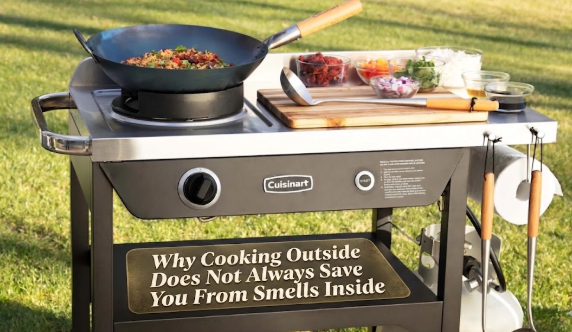
Cooking outside the van and still waking up to a space that smells like last night’s fish tacos is one of those things nobody really prepares you for.
The assumption is clean, logical even: move the heat source outside, keep the windows closed, problem solved. You cook, the smell stays out there, you come back in and everything is fine. Except it doesn’t work that way, and if you’ve been living on the road long enough, you already know this. The smell gets in anyway. And the frustrating part is it often has very little to do with where you were standing when you cooked.
1. The Belief That Outdoor Cooking Fixes Everything
This belief spreads quickly in van build communities and for good reason. Cooking something pungent inside a 60-square-foot space without proper ventilation is a real problem. First-hand experience will confirm that fast. So people learn to cook outside and they feel like they’ve found the solution, and then six months in, they still notice the smell and they can’t figure out what they’re doing wrong.
Nothing, mostly. They’re just solving one part of a three-part problem.
A van is not a sealed unit. There are gaps around door seams, vents designed to pull air inward, window screens that let in fine particles, and if the build has been lived in for any real stretch of time, the fabrics, the mattress foam, the insulation tucked behind panels, all of it has been quietly absorbing cooking history for months. Outdoor cooking reduces new infiltration during that single session. It doesn’t touch what’s already embedded.
Wind is the other thing. A light breeze coming from behind while you cook pushes the plume straight toward an open side door or a cracked roof vent. You’re standing outside at a folding table thinking you’re doing everything right, and you’re funneling the smell directly into the interior without realizing it. The cooking location only controls one variable, and wind isn’t one of them.
And then there’s you. The hoodie, the hair, the shirt you cooked in. All of that comes back inside.
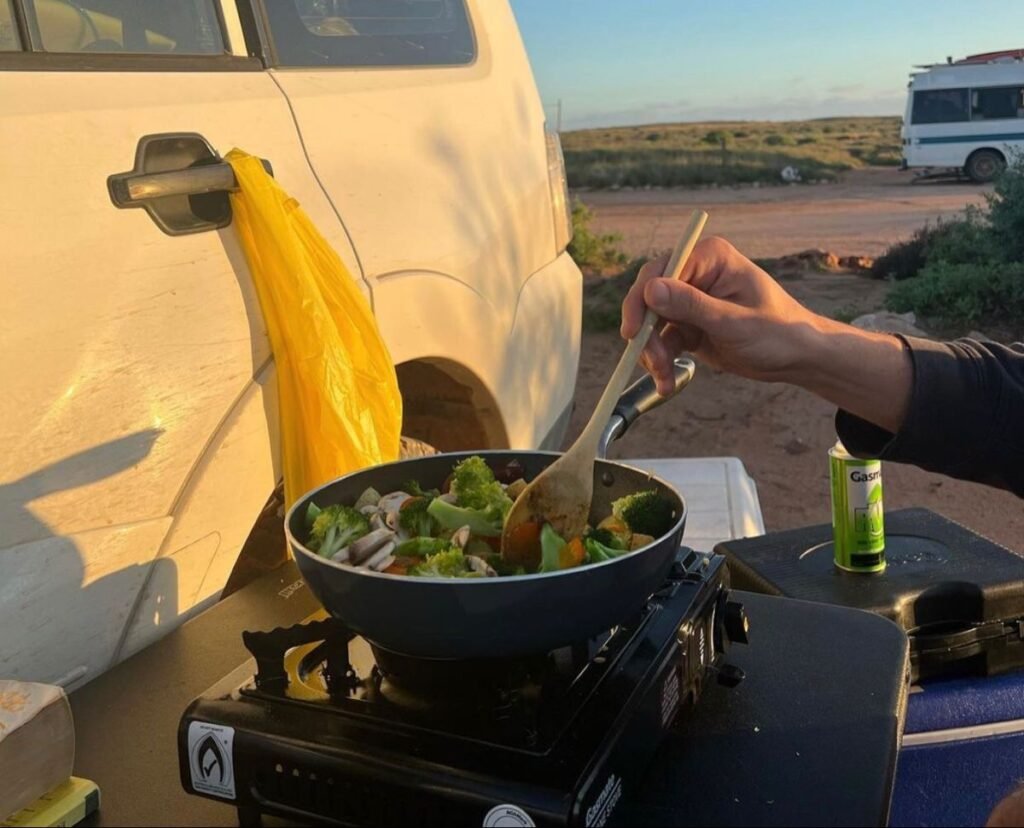
2. Where the Smell Is Actually Coming From
If you’ve come back to your van after a few hours away and smelled something that had no business still being there, the likely culprits are less dramatic than a ventilation failure. They’re surfaces.
The cutting board. The sponge sitting in the corner of the sink. The dish towel you dried your hands on after handling onions or raw protein. The rubber mat under the stove. These things trap odor passively, without any single dramatic event, and they sit there slowly releasing it back into your space around the clock.
Textiles do this more than anything else. Van builds with fabric-covered walls, exposed wood shelving, curtains, or soft storage bags hold smell in a way that tile and stainless steel never would. A good meal prep session done inside with salmon or fried eggs, even with the roof vent running, leaves something behind in the curtain fabric. You won’t notice it in the moment. You’ll smell it the next morning.
The subfloor and wall cavities are a longer-running issue. Steam that works its way into gaps around the sink area or behind cabinet panels doesn’t come back out cleanly. Over time, particularly in humid coastal climates or rainy stretches, this builds a base layer that no location change while cooking can fix, because you never actually got to the source.
Here’s where people usually go wrong: they blame the most recent cooking event rather than the accumulation underneath it. They think, I cooked fish last night, that explains it. But that fish compounded on top of three previous sessions, and those compounded on the general moisture that never fully dried, and the van has been keeping quiet records of every meal made inside it. No single meal is the villain.
3. What Outdoor Cooking Actually Controls (And What It Does Not)
To be clear: cooking outside does help. It’s a real part of managing smell in a van, especially for high-volatility meals. But it helps with a narrower slice of the problem than most people expect.
What it genuinely reduces is the volume of airborne particles released inside the van during that session. High-heat cooking, hard searing, anything with browning proteins or heavy frying, these produce the most particulate and vapor. Keeping that process outside means less of it enters the interior in real time. For strong one-off meals, it’s worth doing.
What it doesn’t address:
| Smell Source | Does Cooking Outside Fix It? |
|---|---|
| Airborne particles from that one cooking session | Mostly yes, if wind direction is managed |
| Embedded odor in textiles and soft furnishings | No |
| Residual odor on cutting boards, sponges, towels | No |
| Smell transferred on clothing brought back inside | No |
| Moisture buildup behind panels and under flooring | No |
| Weeks of accumulated cooking in the same space | No |
| Odor from food packaging and stored ingredients | No |
So if you cook outside and the van still smells, you’re not failing. You addressed one entry point. The others are still open and they’ve been open the whole time.
It’s also worth noting that cooking method matters as much as cooking location. Meals that don’t involve sustained high heat or heavy aromatics just produce less smell to begin with. A pot of rice and vegetables simmered at medium heat is not going to leave the same trace as a full curry with fried aromatics. The one-pan van dinners that rely on lower-heat profiles and minimal fat splatter are genuinely easier to manage from a smell perspective, not because of any trick, just because of how they cook.

4. What Actually Makes a Difference Over Time
The honest answer is that smell management in a van is a combination of habits, not a single fix. Outdoor cooking is one habit. It should sit alongside a few others.
Cross-draft ventilation is the version of ventilation that actually works. Having a roof vent cracked open is not the same as creating a draft. Open a window on one side, open the vent or door on the opposite side, and you create airflow that pulls through rather than just sitting. Twenty to thirty minutes of this after any cooking session, inside or out, makes a compound difference over weeks and months.
Surface treatment is boring but specific. A cutting board wiped down with diluted white vinegar between uses doesn’t just kill surface bacteria, it removes odor compounds before they have time to off-gas back into the space. The dish cloth should be changed often, probably more often than seems necessary, and certainly more often than it happens in most vans. These aren’t exciting interventions. They’re the ones that actually compound correctly over time.
Cooking methodology is another lever that gets underused at Vanlife Kitchen. Batch cooking using pantry ingredients at lower heat profiles, grains, legumes, long-simmered things, produces dramatically less volatile smell than a quick high-heat fry session. Knowing which meals are high-volatility and which aren’t helps you decide when outdoor cooking is actually worth the setup and when you can manage inside with proper ventilation running. Anyone doing batch cooking without a freezer is already cooking large volumes at once, which matters: more sustained cooking releases more cumulative vapor, so the ventilation game is more important on those days, not less.
Baking soda placed near soft surfaces absorbs ambient odor over time. It’s not a fix. But it costs nothing and supports everything else you’re doing. Activated charcoal sachets work on the same principle. Neither replaces ventilation but they add something real to the routine.
The textile piece is the most direct intervention available and the most consistently skipped. Washing curtains, pillow covers, and any fabric near the cooking zone regularly is the thing that changes how the van smells more than almost anything else. Not seasonally. Monthly, at minimum, if you cook frequently. The smell embedded in fabric is invisible when you’re inside every day. Someone stepping in from outside will notice it immediately.
For anyone building out a recipe rotation using repeatable pantry ingredients, the cooking smell question is worth thinking about before the session starts, not after. High-aromatics session? Cook outside, run the cross-draft after. Simpler grain-based meal? Inside is fine with the vent running. Making the decision proactively is much easier than troubleshooting the smell two days later.
The smell situation in a van is a management problem. It doesn’t get solved once and stay solved. Cooking outside is a useful tool, one of several, but treating it as the answer tends to leave people puzzled when the smell returns by morning. The embedded history of every meal cooked, the surfaces that quietly hold it, the fabrics that release it while you sleep, these all need their own specific attention. Start treating them separately and the space genuinely does improve. Slowly, but it does.
FAQs
If I cook outside every single time, will the van eventually stop smelling like food?
It depends on what’s already embedded. If textiles and surfaces have absorbed months of cooking, outdoor cooking alone won’t reverse that. You’d need to combine it with regular washing of soft furnishings, replacing porous items like old sponges and wooden cutting boards, and running active cross-draft ventilation after every session. Over time, yes, but it requires the full combination, not just the location change.
My van has a roof vent fan. Doesn’t that handle the smell problem?
A roof vent fan running during inside cooking helps significantly, especially in extraction mode. But it doesn’t address smell already absorbed into surfaces, and it won’t neutralize odor coming in on clothing from an outdoor session. It’s the right tool for active cooking and daily air cycling, not for reversing accumulated buildup.
Are there specific foods that cause the worst lingering smell?
Fish, fried foods, eggs, and anything with heavy browning are the main offenders because of the volatile aromatic compounds they produce and how quickly those compounds penetrate soft materials. Curries and stir-fries with heavy allium content fall into the same category. Grains, beans, pasta, and low-oil roasted vegetables produce noticeably less. You don’t have to stop cooking the high-impact meals, but they need more active ventilation and surface cleanup on the day they’re cooked.
Does van size actually matter for smell control?
More than most people expect. A full-size high-roof conversion holds more air volume and supports better cross-ventilation than a smaller cargo van build. More interior volume means more natural dilution. That said, larger builds also have more textile surface area to trap odor, so it’s not a simple advantage. Configuration and ventilation setup matter more than raw size.
I cook outside but still wake up to smell the next morning. What’s going on?
Almost certainly the smell is coming off soft surfaces inside the van rather than from the previous session itself. Bedding, curtains, and clothing stored near the kitchen area absorb ambient odor over time and release it back slowly, overnight especially. The next-morning smell is usually embedded material off-gassing, not residual airborne particles from cooking. Washing those surfaces, particularly the ones physically closest to the stove area, is the direct fix.
Mark Bonito is the writer behind Vanlife Kitchen and documents van cooking from the road at vanlifeeats.com.