

$200. One month. All your food.
I know what you’re picturing because I pictured the same thing the first time I heard this was possible on the road. Instant noodles three nights a week. Gas station snacks that pass for breakfast. Eating cheap in a way that means eating badly and feeling vaguely terrible by Thursday.
That’s not what this is.
I’ve been cooking and eating out of a van for years now, and the months I’ve paid closest attention to spending have been some of the best I’ve eaten. Not “fine given the circumstances.” Actually good. Food I’d cook again. But the $200 ceiling doesn’t just happen, and it’s not about discipline or willpower. It’s about knowing exactly what you’re doing before you pull into a parking lot with a shopping cart.
1. What the $200 Actually Breaks Down Into
Start with the numbers. Not recipes, not meal plans, just numbers, because the number is where most people get stuck.
$200 a month is $6.67 a day. Three meals, that’s $2.22 per meal. That sounds tight and it is, but tight doesn’t mean sad if you’re working from the right framework. The math only holds up when you understand where the money is actually going, which most van lifers don’t figure out until they’ve overspent a few months and started wondering why.
Here’s the breakdown that works for solo van cooking:
| Category | Monthly Range |
|---|---|
| Dry staples (oats, rice, lentils, pasta, dried beans) | $28–38 |
| Canned goods (beans, tomatoes, fish, coconut milk) | $22–32 |
| Fresh produce (bought in small quantities, twice weekly) | $40–55 |
| Protein (eggs, tinned fish, legumes, occasional meat) | $30–42 |
| Oils, vinegar, soy sauce, spices | $8–14 |
| Extras (tortillas, nut butter, hot sauce, coffee) | $12–20 |
That totals somewhere between $140 and $201 depending on where you are and what’s on sale. The produce line is where variation lives. Rural Midwest, you’re on the low end. Coastal California or the Pacific Northwest, expect to push toward the top. The categories stay the same either way.
Notice what’s not in the table: restaurant meals, packaged snacks, prepared food. Not because eating out is off limits, but because those things operate outside the $200 system. Every burrito bowl or $4 trail mix bag moves the number. That’s a choice, not a failure. Just know that if you’re buying convenience food two or three times a week, you’re not working from this budget anymore.
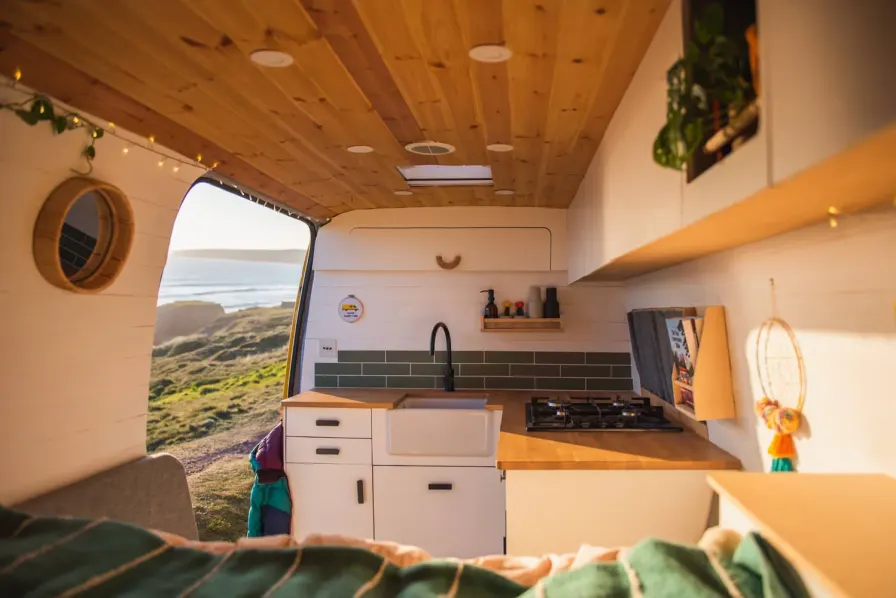
2. The Pantry Setup That Makes the Budget Real
Most people new to van cooking spend more than they should, and it’s almost never because of one expensive purchase. It’s because they have no pantry.
Not a bad pantry. No pantry at all.
When you don’t have base ingredients on hand, every single meal requires a fresh shopping decision. You stop somewhere for one thing, you leave with six things, you didn’t plan anything specific, and you’ve already spent $28 without eating better than you would have from a $3 bag of lentils. I did this in my early months on the road before I figured out how I actually wanted to cook and what I actually needed to have on me.
The fix is a working pantry. Not a complicated pantry.
What needs to be on hand at all times: oats in a sealed container, two or three canned or dried legumes, rice, pasta, olive oil, an acid (lemon or apple cider vinegar works), soy sauce, and a small collection of spices. Cumin, smoked paprika, chili powder, garlic powder, black pepper. That’s basically it. If those things are in your van, you can always make food. You never have to eat something bad because you had nothing to work with.
The piece on 5 van recipes that use the same 8 pantry ingredients breaks down exactly how far a simple core setup stretches across an actual week of cooking. Worth reading before you go stock up, because seeing it applied to real meals is more convincing than a list.
Spices specifically: buy them from ethnic grocery stores. The markup on the small branded jars at mainstream supermarkets is significant. A bag of whole cumin from an Indian grocery costs about $1.50 and lasts months. Smoked paprika, coriander, turmeric, all of them come in cheaper and fresher because the turnover is higher. It’s a small thing that adds up more than it should.
3. Where Van Food Budgets Actually Break Down
This is the section that matters most. Not how to buy the right groceries, but how to stop losing money in the places you don’t notice.
The expensive van food habit isn’t eating at a restaurant every few days. It’s the small, repeated purchases that come from not having a plan. The $3 chips because you’re hungry and driving and it’s right there. The two coffees from different stops in one day because you ran out of your own. The beautiful vegetables you bought at a Saturday farmers market because everything looked incredible, and then three days later they’re not quite usable anymore because you were moving and never made the thing you planned.
That last one is real and specifically a fresh food problem.
When you’re van living without a fridge or with a small cooler, buying produce without a specific meal in mind is a quiet budget leak. Not a disaster, just a slow drain. The rule I’ve landed on: fresh food in small quantities, two or three days at a time, tied to an actual dish I’m going to make. Not “I should eat more vegetables this week.” An actual dish.
If you’re running without refrigeration, the way most van setups actually work, the no-fridge van recipes that work for weeks on the road post on Van Life Kitchen reshapes how you think about the fresh food category entirely. The answer isn’t to avoid it. It’s to buy different things.
The other budget leak is variety for its own sake. Six different grains, four different oils, a new interesting sauce every time you stop somewhere with a good grocery section. Variety feels good in the moment and costs you across the month. Pick your core ingredients, learn to cook them well, and resist the urge to diversify the pantry beyond what you’ll actually use in a week.
4. The Shopping Pattern That Keeps Costs Flat
Twice a week. Small amounts. A list that’s tied to meals I’m actually planning to make.
Early in the week I restock any pantry gap and buy fresh produce for the first three days. Midweek I buy fresh items for the back half and pick up any perishable protein I need. That rhythm stops me from over-purchasing on any single trip and from running low and making desperate stops at expensive places.
The store matters more than most people think. Aldi and Lidl will save you more than any budgeting method if you’re near one. Grocery Outlet in the West. WinCo. Food4Less. Ethnic supermarkets for produce and staples, which are almost always cheaper per pound and often fresher because turnover is high. I’ve driven a few extra miles to get to a better store and never once felt like it wasn’t worth it.
Eggs remain one of the best values on the road. A dozen at $2–4 covers breakfast, cooks into fried rice, hard-boils for the road, and shows up in a dozen other meal contexts without ever feeling like a compromise. Canned salmon is the other one people underestimate. A can of wild-caught pink salmon over rice with soy sauce, sesame oil, a squeeze of lemon, and whatever pickled thing I have is a genuinely good meal that costs about $2.50. People skip it because canned fish feels like settling. It isn’t.
Batch cooking is the other half. Not elaborate Sunday prep, just simple doubling. Making rice? Make extra. Cooking lentils? Cook twice as much and use the rest tomorrow in a soup or with scrambled eggs. The van life batch cooking without a freezer post covers the safety mechanics of this when refrigeration is limited, which is a real consideration people skip over and shouldn’t.
5. What a Real Week of Eating Actually Looks Like
Last spring in New Mexico, I tracked a week of eating carefully. Not for any specific reason, just to see how close I was actually running to my own numbers.
Monday: Oatmeal with peanut butter and half a banana. Leftover lentil soup from the batch I made Sunday night. Black beans scrambled with eggs and hot sauce for dinner, with tortillas.
Tuesday: Same oatmeal, I was moving early. Leftover soup again. Rice bowl with canned salmon, soy sauce, sesame oil, pickled jalapeños from a batch I’d made the week before.
Wednesday: Eggs and toast. Pasta with olive oil, garlic, canned tomatoes, white beans. A piece of fruit I’d bought.
Thursday and Friday: Variations on the same. One night I made a big pot of dal that covered two meals. Another night was fried rice from leftover rice, two eggs, and whatever vegetables I needed to use before they turned.
Weekend: Ate at a food truck one of those days. $14. That’s the kind of spend that’s fine and budgeted for.
Total grocery spend for the week: $46. I wasn’t hungry. I wasn’t bored. I was eating something I’d actually cooked, which matters more than people admit when you’re living in a vehicle and every other part of the day involves some degree of improvising.
The van life meal prep for solo travelers with real portion sizes piece gets into the portion math specifically, because cooking for one is a skill in itself and making too much of the wrong thing is a waste that quietly adds to the budget.
A Few Things the Budget Doesn’t Account For
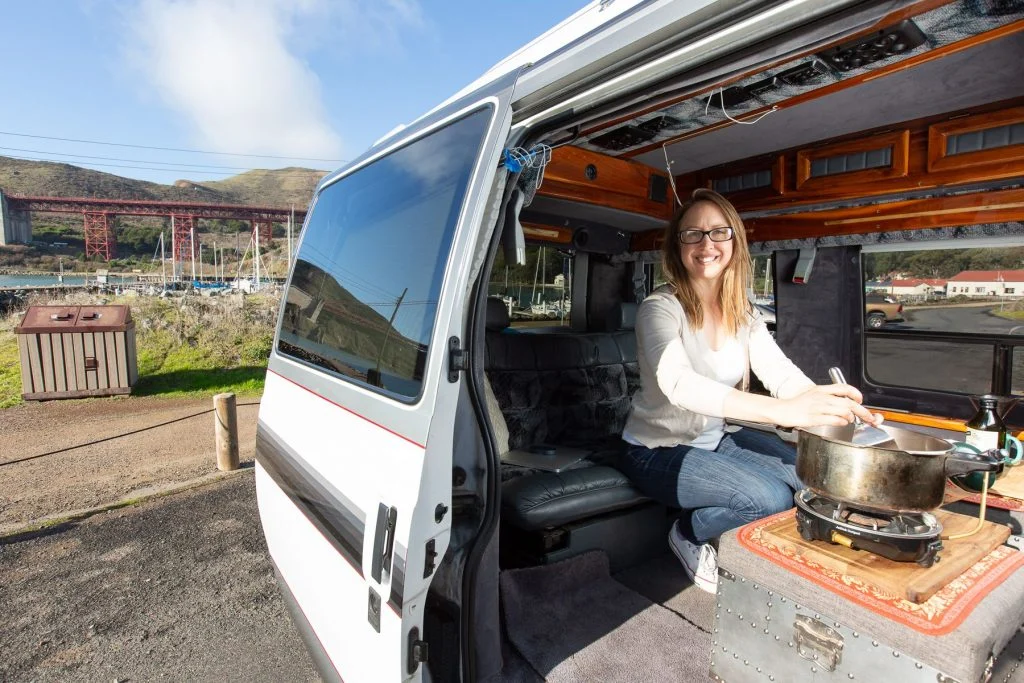
Solo traveler, the math works cleanly. Two people sharing a van, you’re not looking at $400 combined. More like $280–340, because pantry costs are mostly fixed regardless of how many people eat from them. Oil, rice, dried beans, spices, they cost the same whether one person or two is cooking with them. The variable is fresh food and protein, and that scales differently.
The budget also assumes most meals are cooked. Two restaurant meals a week, even inexpensive ones, adds $60–90 to the monthly total without touching the pantry. That’s a real thing to account for. It’s not wrong to eat out. Just know the actual number.
And some months will run over. You’ll be in expensive grocery territory for two weeks, or you’ll have a stretch where you’re exhausted and you eat out more than usual. $230 in a hard month. $160 in a month with a run of good stores. The $200 is an average, not an unmovable ceiling you should feel bad about crossing once.
Over the years of writing here at Van Life Kitchen, the question I get most often isn’t how to cook in a van. It’s how to afford to eat well in one. The answer is always the same: pantry first, fresh food in small quantities, shop smart and often. Get those three things working together and the number takes care of itself.
FAQs
Is $200 realistic for someone completely new to van cooking, or does it take time to hit that number?
It takes a few weeks to settle in. The first week you’ll probably overspend because you’re still learning what you actually use versus what you think you’ll use. By week two or three, you’ve got a working pantry and a sense of what your real weekly spend looks like. Most people who start tracking honestly land at or below $200 within a month.
What’s the cheapest way to get enough protein if you don’t have a cooler?
Dried and canned legumes are the most cost-effective answer: lentils, chickpeas, black beans, white beans. After that, canned fish, specifically sardines and canned salmon. Eggs work too if you buy small quantities and use them within a day or two. The high-protein van meals with no cooler needed breakdown goes into this in depth if protein intake is a specific concern for you.
How do you keep the spice budget low without cooking bland food?
Buy from ethnic grocery stores. Indian, Mexican, and Asian supermarkets sell the same spices in larger quantities for a fraction of what branded jars cost at mainstream chains. A working core of cumin, smoked paprika, coriander, turmeric, and chili powder from one of these stores runs about $5–8 total. That same set from a conventional supermarket would cost three times that and come in smaller containers.
Does coffee fit inside the $200 or is that separate?
It depends on how you drink it. Brewing your own with a French press or a simple pour-over, a bag of decent whole beans runs $8–12 and lasts two weeks. That fits inside the budget without stress. If you’re buying a cup somewhere most mornings, that’s $60–90 a month that has nothing to do with food and should be tracked separately. It’s not a moral issue, just a budgeting one.
What do you do when you’re stuck in an area with expensive grocery stores for a week?
Lean into shelf-stable pantry food and buy less fresh produce. Dried lentils and canned beans don’t cost more in San Francisco than they do in rural Kansas. Fresh vegetables do. The strategy is to flex on the fresh category while holding your pantry staples constant. A week of mostly pantry cooking in an expensive area keeps the monthly average down, even if that specific week feels a little repetitive. It’s temporary, and the pantry handles it.