
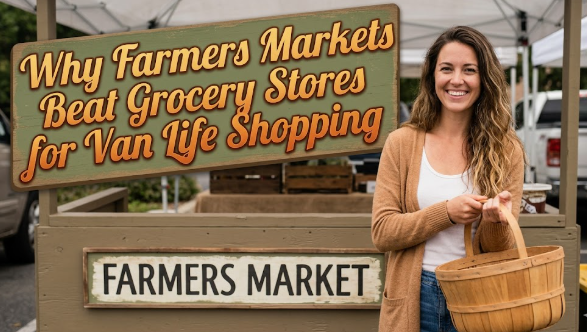
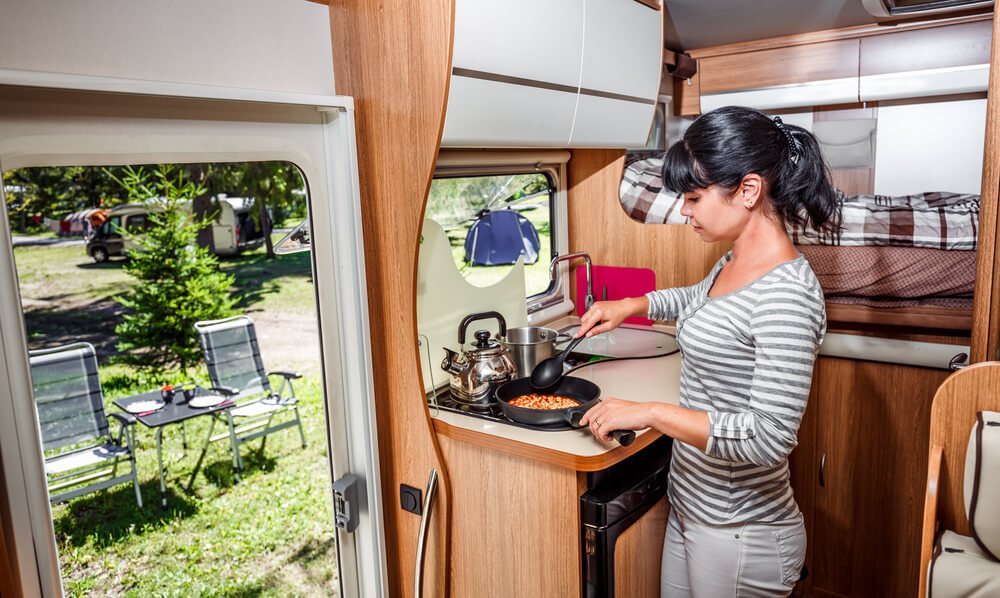
The assumption I kept seeing in van life groups, forums, road trip threads: farmers markets are a weekend leisure activity. A nice thing to do when you have time and no distance to cover. Not a practical stop for someone cooking in 60 square feet of living space who needs to move on by midday.
I ran on that assumption for the first few months on the road. Then I started paying attention to what I was actually throwing away.
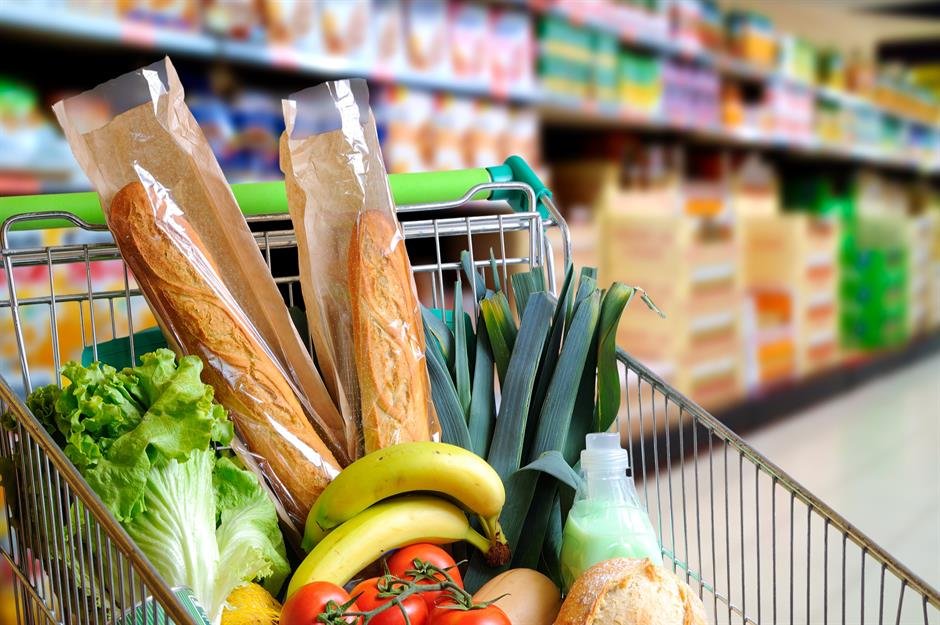
A bag of spinach gone yellow by Wednesday. A four-pack of chicken thighs when I needed two. Courgettes sold in cling-wrapped pairs, one going soft in the fridge corner before I got to it. A 100g pack of root ginger when I’d use maybe 20g before it shrivelled. Grocery stores are designed around households that shop once a week, have a proper fridge, and have other people finishing what they don’t. That is not van cooking. And the mismatch adds up fast, in waste and in spend.
1. Why Grocery Stores Work Against the Van Kitchen
The core problem is the quantity assumption built into every aisle. Everything is packaged for a minimum of two people, often four. You want one bell pepper, you’re buying three in a bag. You want a small bunch of coriander, you’re buying 30g that will turn black at the edges within three days. You want 200g of cherry tomatoes because that’s what one pasta sauce actually needs, you’re buying a 400g punnet and hoping for the best.
That’s before you consider the journey the produce has taken. Most supermarket fresh food travels a significant amount of time before it hits the shelf. It’s picked early, transported, stored cold, and arrives already several days into its life. In a house, you might work through it fine. In a van where you’re shopping every two to three days and managing a 45-litre fridge, you’re often buying produce with less remaining shelf life than you’re planning around.
The other thing grocery stores can’t give you is a conversation. You’re not going to ask the shelf whether those tomatoes are actually ripe yet, or whether you should wait two days and come back. You pick up the packet, check the use-by date, and guess.
That guessing costs money. And space. Both of which are things van kitchens don’t have in abundance.
If you’re building out a batch cooking system without a freezer, buying produce at the right stage of ripeness matters more than most people realise. Slightly underripe and your stew is bland. Already past it and your vegetables are losing texture before they hit the pan.
2. What Farmers Markets Actually Give Van Lifers
The single biggest practical advantage: loose produce. You want three carrots? Buy three. One leek? Done. A small handful of cherry tomatoes, just enough for a quick salsa to go alongside whatever you’ve got cooking? Fill the bag. Pay accordingly. This is not a small thing when you’re managing limited storage and cooking for one or two people on any given day.
The second advantage is ripeness transparency. I’ve stood at market stalls where a vendor told me, flat out, that the strawberries were better last week and this batch would need two more days. That does not happen in a supermarket aisle. Farmers and market traders know the product in a way that no label can replicate, and most of them will tell you the truth because it protects the relationship they’re trying to build with regular customers. Ask what’s at its best right now and you’ll get an honest answer.
Pricing is where people go wrong most often. The assumption that farmers markets are always more expensive is not accurate across the board. Specialty items, rare varieties, organic certification, yes, often pricier. But seasonal vegetables at their peak, bought loose without the cost of packaging and logistics built in? Often competitive. Sometimes cheaper. A 100g bag of prepared salad leaves from a supermarket might cost you two pounds and wilt in three days. The same 100g of loose leaves cut that morning will hold significantly longer because it hasn’t already been sitting in a cold chain for a week.
Here at Van Life Kitchen, the philosophy is built around buying smarter rather than buying more. Freshness bought in small, precise quantities beats bulk buying every single time for a solo or two-person van setup.
3. Farmers Market vs Grocery Store: Van Life Reality Check
| Factor | Grocery Store | Farmers Market |
|---|---|---|
| Minimum purchase quantity | Pre-packaged (often 3-4x what you need) | Loose, buy exact amounts |
| Produce freshness at purchase | Variable, often 3-5 days old already | Same day or harvested day before |
| Ability to ask questions | None | Direct vendor knowledge, honest answers |
| Pricing on seasonal veg | Consistent, moderate | Seasonal variation, often competitive |
| Pantry staples (pasta, tins, oil) | Fully stocked | Rarely, and usually expensive |
| Opening hours | High predictability | Typically Saturday/Sunday mornings only |
| Discounted or ugly produce | Rare and small | Common at end of market |
| Packaging waste generated | High (cling film, plastic trays) | Low to none |
| Location reliability on the road | High (chains in most towns) | Requires planning ahead |
| Seasonal variety | Limited, same year-round | Changes weekly, high variety |
What the table makes clear: these are not direct competitors. They solve different problems. Using only one of them is where van cooks run into trouble.
4. Where the Grocery Store Still Wins
Pantry staples. That’s the honest answer, and it’s a significant one.
Dried pasta, rice, lentils, oats, tinned tomatoes, canned beans, olive oil, stock cubes, jarred anchovies, a decent vinegar. Farmers markets rarely carry any of this, and when they do, it’s from a specialty supplier at a specialty price. For shelf-stable base ingredients, the grocery store is your best option and always will be.
Protein is the other area. If you’re not passing a market with a butcher or fish stall, and you need protein for tonight, a grocery store is your solution. Eggs, tinned fish, chicken thighs, firm tofu, all of these are perfectly adequate from a supermarket and the quality difference rarely changes the outcome enough to matter.
And there’s the practical reality of road life: you don’t always have a choice. You arrive somewhere on a Tuesday evening, the market was Saturday, and you need to eat. The grocery store fills the gaps. That’s its job.
For no-fridge van recipes that work across weeks on the road, the grocery store is actually the primary supplier for the shelf-stable foundation. The farmers market adds the fresh layer you build around that base.
Trying to do all your shopping at one or the other is the mistake. The hybrid approach, farmers market for fresh produce bought in exact quantities, grocery store for pantry staples and protein basics, is what actually works long-term.
5. How to Shop Farmers Markets When You’re Living on the Road
Timing is the first thing to get right. Most people arrive at markets mid-morning, early enough for good selection. The best value for van lifers comes at the end, typically the final 30 to 45 minutes before close. Vendors don’t want to pack produce back into their vans. Prices on fresh items drop noticeably. Bags get more generous. You can walk away with serious quantities of spinach, stone fruit, or tomatoes for a fraction of the opening price. I’ve picked up a full kilo of end-of-market peaches for fifty pence. The produce was perfect. Just needed eating that evening.
Ask specifically for ugly produce. Most market vendors have a crate of imperfect or slightly damaged items they’re not displaying. These are completely fine for cooking, and the vendor will often let them go for half price or less. A bruised peach is still excellent once it’s sliced and going into a pan with a bit of sugar and lemon. A courgette with a soft patch takes thirty seconds to prep around.
Build a route. If you travel a regular circuit, which a lot of long-term van lifers do, try to return to the same markets and make yourself known. This isn’t about being charming, it’s practical. Vendors start recognising faces. They’ll save things, tell you what’s coming next week, and give you more flexibility on price at close of day. And it’s, I don’t know, it’s one of the better parts of van life honestly, the kind of food connection you don’t get in a supermarket car park.
Know what to prioritise by how long it stores. Root vegetables, hard squash, cabbage, onions, garlic, these hold for a week or more in a cool van. These are your farmers market bulk purchases. Leafy greens, fresh tomatoes, stone fruit, herbs, buy these in small amounts and use them within two days. The meal prep framework for solo van travelers maps directly onto this buying structure: long-life items in quantity, fresh items bought just ahead of use.
Keep some cash. A lot of smaller stalls now accept cards, but not all, and the ones that prefer cash will often move more on price. A small float in the van costs nothing and opens doors.
And the one thing most van cooks skip at markets entirely: the bread, the cheese, the honey, the pickles. These aren’t luxury extras. A loaf of good sourdough from a market baker, some decent hard cheese, and a jar of pickled something is a better lunch than most things you’d spend three times as much on elsewhere. Takes no cooking, leaves no washing up, and doesn’t require a burner. These are the additions that make a van kitchen feel like something more than a camping setup.
Van Life Kitchen’s whole approach to road cooking is built on the idea that constraints push you toward better decisions. Farmers markets force you to buy what’s actually seasonal, actually fresh, and actually what you’ll use. Those constraints turn out to be advantages.
FAQs
Are farmers markets actually cheaper than grocery stores for van life shopping?
On whole vegetables and seasonal produce, yes, often competitive and sometimes cheaper per 100g, especially when you factor in that you’re buying only what you need with no waste. The premium category is specialty items: organic certification, artisan products, rare varieties. Focus your market spend on core seasonal produce and leave pantry staples for the grocery store. That split is where the real savings land.
How do I find farmers markets when I’m moving around?
In the US, the USDA Agricultural Marketing Service runs a national farmers market directory that’s searchable by location. In the UK, the FARMA website has a solid regional listing. Beyond that, a simple search of “[town name] farmers market Saturday” or “[town name] market” will catch most of them. Planning your route loosely around a Saturday morning market stop, even a minor detour, is worth it once you’ve seen the difference in what you come away with.
What produce from a farmers market holds best without refrigeration in a van?
Root vegetables are your most reliable buy. Carrots, parsnips, turnips, potatoes, and sweet potatoes will hold for a week or more in a cool van. Cabbages, whole onions, garlic, and hard squash like butternut are similarly durable. These are the bulk market buys. Anything with high water content, tomatoes, courgettes, leafy greens, stone fruit, needs to go into meals within two days of purchase. High-protein van meals that need no cooler covers how to build satisfying food around the more shelf-stable fresh options specifically.
Can you negotiate prices at farmers markets?
At end-of-day, yes, and most vendors expect it. During peak hours, asking for a discount is usually going nowhere and can feel awkward. But in the last half hour, when stalls are packing down and there’s produce that won’t make it to next week’s market, asking “what can you do for me on the rest of this?” is completely normal and almost always gets a result. The uglier or more perishable the item, the more room there is to negotiate.
What’s the best split between farmers market shopping and grocery store shopping for van life?
One farmers market run per week for fresh produce, herbs, and occasional specialty items. Grocery store top-ups as needed for pantry staples: pasta, rice, tins, oil, dairy, eggs, tinned protein. The market handles the fresh, perishable layer of your cooking. The grocery store maintains the base. Trying to do all your shopping at either one creates problems: too much waste from the market if you overbuy perishables, too much packaging and quantity mismatch from the grocery store if you rely on it for fresh produce. The split approach takes about two weeks to settle into a rhythm, but once it does, it genuinely changes how efficiently a van kitchen runs.
The van kitchen isn’t a lesser version of a proper kitchen. It’s just a different one, with different rules and a different ceiling for what’s possible. Farmers markets were built on the same underlying logic: buy what’s good, buy what you’ll use, buy it from someone who actually knows the product. That fits van cooking better than any supermarket aisle ever will.