
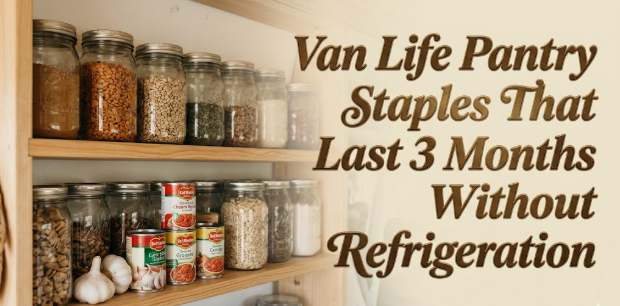
The first long stretch I did without a supermarket nearby taught me a lot. About four months into full-time van life, I’d stocked up before heading into a remote stretch of coastal Portugal, grabbed everything I thought I needed, felt very prepared, and drove away feeling smug. A week in, I was eating plain rice with soy sauce because almost everything else I’d bought either needed a fridge or had quietly gone off in the ambient heat of a south-facing van in July. Lesson learned. Slowly, and slightly expensively, because throwing away food in a van stings more than it does at home. The bin isn’t hidden in a cupboard under the sink. You see it. You know exactly what it cost you.
Since then, building a pantry that actually lasts three months without refrigeration has become something I take seriously. Not just “grab a few tins” seriously. Properly, systematically seriously.
This is everything I’ve learned from getting it wrong, then gradually getting it right.
1. The Dry Goods That Actually Go the Distance
Pasta, rice, lentils, and dried chickpeas are the backbone of any real van pantry. Most people know this already. But the detail that consistently gets missed is why these work so well, and specifically what kills them earlier than they should.
Dried pasta sealed in a good airtight container lasts well over a year at ambient temperature. Same goes for white rice. Brown rice is a different story because the higher oil content in the bran layer means it goes rancid faster, usually within 6 months in warm conditions. If you’re running a van in summer without climate control (which is most of us), white rice is the safer long-term choice. I keep mine in a screw-top Tupperware rather than the paper bags it comes in, partly to stop moisture getting in and partly to stop anything else getting in. Ants are real.
Red lentils cook in 15 to 20 minutes without any soaking, which matters a lot when you’re managing gas. Green and brown lentils take longer and want a soak overnight, so I mostly reach for red on the road. Canned chickpeas are shelf-stable for roughly two years before opening and are ready to use in five minutes, which makes them my go-to when I need protein fast. But dried chickpeas cooked low and slow on a quiet morning? Completely different texture. Worth the extra time when you have it.
Oats earn their place too. Rolled oats in a sealed container keep for at least 12 months in the van, possibly longer if temperatures stay reasonable. The biggest enemy of dry goods isn’t time, it’s moisture. A badly sealed container in a van that gets cooking condensation is a problem, the oats clump, then eventually mould. The seal matters more than the clock.
If you’re planning three months between major restocks, pairing this kind of pantry with some actual meal planning makes it far less stressful. The van life meal prep guide for solo travellers over at Van Life Kitchen covers the portion side of things in detail, which matters more than most people think when you’re buying in bulk without a freezer.

2. Fats, Oils, and the Flavour Makers People Underestimate
This is where a lot of vanlifers underestimate what they’ve actually got. Olive oil stored out of direct sunlight, in a cool spot, keeps perfectly well for 18 to 24 months unopened. The problem is heat and light, both of which are hard to avoid entirely in a van. A bottle sitting in direct sunlight on a warm shelf goes rancid in a few weeks. So: buy small. A 500ml bottle is more practical than a litre. Buy two small ones rather than one large one, you’ll move through them more reliably before the flavour drops.
Natural nut butters are shelf-stable for months and deliver protein, fat, and calories in a compact form. The kind where the oil separates (which is the kind worth buying) lasts about 3 to 4 months unrefrigerated once opened. Stabilised versions go longer, sometimes 6 months, but the flavour is different. I use the natural kind and just stir it before each use. Peanut, almond, sunflower seed — all solid options.
Soy sauce, fish sauce, and hot sauce are the three condiments I’d never leave behind. All of them keep for a year or more at room temperature once opened. Soy sauce is a fermented product, the salt content is high enough that microbial spoilage is basically a non-issue. Same logic applies to sriracha. Miso paste keeps well too, although it benefits from being stored in a cool spot rather than on a shelf above the hob.
Dried spices are obvious, but the shelf life question gets more specific than most people realise. Ground spices retain real potency for about 6 to 12 months in warm conditions. Heat accelerates flavour loss significantly. Whole spices — cumin seeds, coriander seeds, mustard seeds — stay potent for closer to two years. If you have space for a small mortar and pestle, buying whole and crushing yourself is genuinely worth it on a long trip. The difference in fragrance when you crack whole cumin versus shaking out a pre-ground jar that’s been sitting in a hot van since February is not subtle.
3. The Shelf-Life Reference Chart
This is the chart I wish I’d had before that Portugal disaster. Rough guide, not gospel — conditions in every van vary depending on the season, the climate, and how well sealed your storage actually is.
| Pantry Item | Sealed (Unopened) | Opened, No Fridge | Storage Priority |
|---|---|---|---|
| White rice | 2+ years | 6–12 months | Airtight container, away from heat |
| Dried pasta | 2 years | 12 months | Sealed Tupperware, dry spot |
| Red lentils | 2–3 years | 12 months | Glass jar or clip-lock container |
| Canned tomatoes | 2–3 years | Use same meal | Keep in coolest part of van |
| Canned chickpeas | 2–3 years | Use same meal | Store upright, avoid denting seams |
| Olive oil | 18–24 months | 2–3 months once opened | Dark bottle, out of sunlight |
| Natural peanut butter | 12 months | 3–4 months | Tight lid, stir before use |
| Soy sauce | 3 years | 12+ months | Essentially indestructible once sealed |
| Rolled oats | 18 months | 6–9 months | Moisture is the only real threat |
| Honey | Indefinitely | Indefinitely | No expiry, will crystallise but recovers |
| Coconut milk (can) | 2–3 years | 1–2 days maximum | Buy small 165ml cans if cooking for one |
| Dried chilli flakes | 2–3 years | 6–12 months (potency fades) | Small jars, out of direct sun |
And a few specific notes on that list. Honey genuinely does not expire. Archaeologists have found thousands-of-years-old honey in Egyptian tombs that was still technically edible. The moisture content is too low and the pH too acidic for bacteria to survive. If it crystallises in the van, a short sit in a bowl of warm water brings it back with no issues. I always keep a small jar going. It goes into oats, into sauces, into salad dressings, into tea — honey does many jobs.
Coconut milk is the one that has caught me out more than once. It does not keep after opening without refrigeration, two days at most and the texture starts changing. Buy the small 165ml cans rather than standard 400ml ones if you’re cooking for one or two. It costs a little more per litre but you’ll stop wasting it, and the waste cost is higher.
4. Where Vanlifers Go Wrong With Long-Term Storage
The most common mistake — and genuinely the one I see come up most often — is buying “non-perishable” food and then storing it badly. A tin of tomatoes is not going to go off, but a bag of rice left in its original paper packaging in a van hitting 38°C on a hot August day absolutely can. Moisture, heat, and light are the active enemies of shelf stability. The food itself isn’t the problem. The conditions are.
A specific one worth flagging: nut bars and granola bars are often bought as long-term snacks, but the actual shelf life is shorter than people assume. Anything with dried fruit and no added preservatives often has a best-before window of only 3 to 5 months, not the year or more you might guess from the packaging. Some protein bars with high fat content go rancid faster still. Smell before you eat, always. A rancid fat smell is distinctive and not easy to miss once you know what you’re looking for.
The other thing that catches people out is confusing “best before” with “unsafe.” Best-before dates on dry goods are quality indicators, not safety cutoffs. Rice three months past its best before that’s been stored properly is fine to cook and eat. The texture might be very slightly different, but there’s no food safety concern. Canned goods work the same way: as long as the can isn’t swollen, dented at a seam, or leaking, the food inside is almost certainly fine well past the printed date. A dented side is usually nothing. A dented seam is a different matter.
The last thing I’d add here is this: the people who struggle most with long-term van pantry management are the ones who buy a range of ingredients without thinking through the meals first. If you buy a jar of tahini because it sounds useful and keeps well, but you don’t actually know four or five dishes you’d put it in, it will occupy shelf space for three months doing nothing. Over at Van Life Kitchen, the approach has always been that every staple earns its place by being able to do multiple jobs. The 5 van recipes that use the same 8 pantry ingredients is exactly this kind of thinking in practice — it changes how you shop.

5. Building Real Meals From a Shelf-Stable Base
Three months without refrigeration sounds restrictive until you actually start writing out what you can build. A base of white rice, red lentils, canned tomatoes, olive oil, garlic granules, cumin, and coriander gives you a proper dal. Add a small tin of coconut milk and it goes from good to very good. That’s seven ingredients, all shelf-stable, all earning their space.
The thing that lifts pantry cooking from survival mode to something you’d actually choose to eat is layering flavour. Frying garlic granules and cumin seeds in oil before adding tomatoes takes two minutes and completely transforms the base of a dish. Using soy sauce as a savoury backbone in rice dishes, adding a splash of vinegar to cut through richness, finishing with chilli flakes rather than cooking them in from the start. These are small adjustments but they change everything about how the food tastes.
For anyone doing batch cooking without a freezer, a well-stocked dry pantry is what actually makes it viable. Cook a big pot of lentils, eat half that night, and use the rest the following day with a completely different spice profile and a different grain base. Same lentils, different meal. That kind of flexibility relies on having dry goods and flavour makers on hand, not on whatever was left over from last week’s fresh shop.
One more thing worth mentioning, and I realise I’m slightly going off on a tangent here but it’s relevant. Fermented and shelf-stable flavour enhancers — miso, soy sauce, fish sauce, preserved lemons — are what separate a real van kitchen from a camping setup. Most camping food tastes like something’s missing. Usually that something is depth, and you get depth from fermented products and from fat, not just from heat. Preserved lemons are easy to make in a jar and keep for months at room temperature. A small jar of miso will last the whole trip. These are the things that make rice and lentils taste like a meal you’d order rather than a meal you had no other choice but to make.
The no-fridge van recipes that work for weeks on the road page at Van Life Kitchen shows how far this kind of cooking can actually stretch. There’s more flexibility in it than most people expect before they try it.
FAQs
Does olive oil actually go bad in a hot van?
It does, eventually. An unopened dark-bottled olive oil in a cool spot will easily keep 18 to 24 months. The problem is that heat and light both accelerate oxidation, and a van is full of both. A bottle sitting in sunlight on a warm shelf turns rancid in a few weeks rather than months. Buy small, use within 2 to 3 months of opening, and store in the coolest, darkest spot you’ve got. A simple cloth bag wrapped around the bottle cuts light exposure significantly without any cost.
Eggs don’t need a fridge — is that actually true or just something people say?
Unwashed eggs keep for 3 to 4 weeks at room temperature without issue. In most of Europe, eggs aren’t washed before sale, which means they retain a protective coating called the bloom that keeps bacteria out. American eggs are washed during processing and therefore must be refrigerated. In a van at normal ambient temperatures, unwashed European eggs kept somewhere cool and shaded are fine for three weeks easily. In very hot weather I’d go through them within two weeks, or hard boil a batch and eat them within a few days of cooking.
What do you actually store oil in — does the container matter?
Keep it in its original dark glass bottle if it came in one. Glass doesn’t absorb flavour compounds or leach anything back into the oil the way plastic can over time. If the original container is clear or translucent, either wrap it or transfer to a dark glass bottle. Amber glass bottles are inexpensive and widely available at most homebrew or health food shops. For cooking oils you go through quickly, a small stainless decanter works well too.
How do you stop dry goods going stale when the van gets damp?
The container is everything. Paper packaging is useless in a van environment — it absorbs moisture and gives anything living in your van a way in. Screw-top Tupperware, clip-lock glass jars, or heavy-duty zip-seal bags as a minimum. I also keep a few small silica gel packets tucked into the dry goods storage area. They absorb ambient moisture and can be regenerated by drying in full sun for a few hours. It’s a small thing but makes a real difference over a long trip, especially in autumn and winter when condensation is worse.
Is there a quick way to tell if canned food has gone bad before I open it?
The main physical signs are a swollen or bulging lid, a dented seam (not a side dent, a seam dent), visible rust at the rim, or a hissing or spurting sound when you open it. If the can looks and sounds fine but the contents smell off or have an unusual colour on opening, don’t eat it. A correctly sealed tin that’s been stored in reasonable conditions and hasn’t been physically compromised is generally safe well beyond its printed date. But if anything looks wrong with the can itself before you open it, skip it.
| Signal | What it likely means |
|---|---|
| Swollen lid or base | Gas from bacterial activity — do not eat |
| Dented seam | Seal may be compromised — check carefully, discard if unsure |
| Dented side only | Usually fine — cosmetic damage, not structural |
| Rust on rim | Inspect closely — surface rust is often fine, deep rust is not |
| Normal can, off smell on opening | Discard, don’t taste-test |
For practical meal ideas built entirely from shelf-stable ingredients, the high-protein van meals with no cooler needed is worth saving for your next grocery run.